The advert sounds unreal the first time you read it.
“Get paid to live on a remote island.” Free housing. Sea views. Fresh air instead of rush-hour fumes. Your brain starts stockpiling images from Instagram: hammocks, sunsets, coffee on a wooden deck with nobody around for miles.
Then you scroll a little lower. There’s a line about “multi‑tasking in a dynamic environment”. A bullet point on “occasional night work”. A tiny note: “Couples preferred. Must be comfortable with isolation.” The fantasy wobbles, just a bit.
More and more local councils, tourism boards and private owners are dangling these island offers. They really do pay. They really are remote. And yes, the photos are usually real. The question hiding under the glossy surface is simpler, less glamorous, and far more interesting.
What do they actually expect from you in return?
The other side of “paradise”
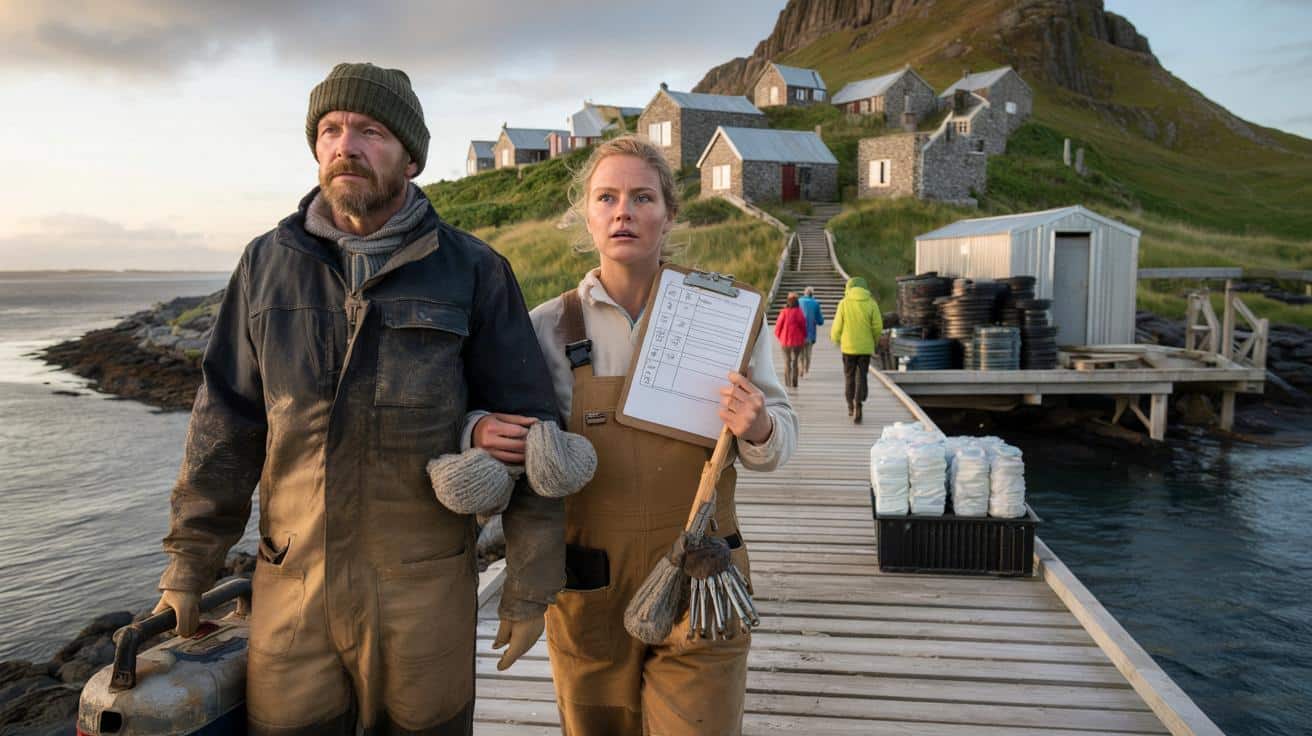
The first thing that surprises people who land one of these island gigs is how quickly the job starts to feel like a job. The ferry leaves, the camera crews go home, and suddenly you’re the person holding the keys, quite literally. You’re not just a guest, you’re infrastructure: the one who opens the gates, checks the generator, refills the water tanks and explains to confused visitors where the toilets are.
That’s the quiet truth behind these dreamy headlines. Remote islands don’t pay you to stare at the horizon. They pay you to keep a fragile little ecosystem – human and natural – running smoothly. Trash doesn’t vanish. Broken pipes don’t fix themselves. And when a storm rolls in at 2am, there’s no facilities team to call. It’s just you, a head torch and the wind.
On Great Blasket Island in Ireland, the much‑shared “Caretaker couple wanted” post has gone viral several times. The reality? It often means 14‑hour days in peak season, turning over simple cottages with no mains power, hauling gas bottles, serving tea and scones to hundreds of tourists blown in by the weather. The pay isn’t wild, but the workload can be.
Alaskan lodges looking for “adventurous, outdoorsy staff” might add a few lines about carrying 20kg supplies up slippery docks, or cleaning fish guts when the day’s catch comes in. One Scottish island job asked applicants to be “comfortable with livestock” – which turned out to include helping a neighbour with lambing at short notice. The remote part is romantic. The work, less so.
What’s going on is fairly simple: remote islands are expensive to maintain and hard to staff. Tourism is seasonal, margins are tight, and locals often juggle multiple roles already. So when an owner or council creates one of these “paid to live in paradise” schemes, they’re trying to solve several problems at once. They want caretakers, marketers, guides, receptionists and, sometimes, unofficial therapists for lonely visitors – all wrapped in one couple or small team.
The headline perk – money to live somewhere wild and beautiful – is the hook. The real exchange is your labour, your flexibility and your willingness to be the responsible adult in the room, even when the room is an empty beach at low tide. The remoteness that sells the dream is exactly what makes you so necessary once you’re there.
➡️ Cheap moisturizers rank high because skin doesn’t recognize branding
➡️ How people naturally reset after social interactions without isolating
➡️ How emotional overload distorts perception of problems
➡️ Boiling rosemary: the simple habit that changes the vibe of a room (and the ventilation tip)
➡️ Why some people greet dogs: psychologists connect it to social openness, not “quirkiness”
➡️ Old furniture looks dull not because it’s damaged, but because the finish reacts to modern cleaners
What these programmes really ask of you
If you peel back the Instagram layer, most paid‑to‑live‑on‑an‑island offers share a surprisingly similar wish list. They want people who are practical first, romantic second. Handy with tools. Calm with strangers. Able to read a weather forecast as well as a recipe. The smartest applicants *treat the job description like a puzzle*, looking for everything that’s implied rather than just what’s printed.
One method that works well is to rewrite the ad in plain, slightly blunt language. “Must be flexible” often means changing beds and cleaning toilets in high season. “Remote setting” usually means patchy internet and no popping out for a takeaway. “Community‑minded” can signal that you’ll be expected to help at local events, volunteer during emergencies or simply be the friendly face for tourists who missed the last ferry back.
People who struggle the most with these jobs rarely fail on skill. They crack on isolation and expectations. You might be great at hospitality, but not at being snowed in for three days with the same three faces. You might love wildlife, but panic when a power cut kills the freezer full of food you were meant to manage. That’s where reading between the lines becomes survival, not just due diligence.
On a human level, there’s another side that rarely fits in the promo videos. These schemes quietly look for emotional stamina. They want someone who won’t crumble when a storm wrecks half the season’s bookings, or when a relationship hits a rough patch miles from family and friends. On a tiny island, your mood leaks into the air. Locals notice. Visitors notice. You notice most of all.
Soyons honnêtes : personne ne fait vraiment ça tous les jours. Nobody wakes up permanently thrilled to be “living the dream”. Some mornings your view is spectacular and you still just want a decent flat white and a bus you didn’t have to book three days ahead. That’s normal. What these programmes really ask is whether you can ride those moods without letting them wreck the work.
One former island caretaker on a Scottish estate told me:
“They hired us to smile for the brochure, but they kept us because we could fix the boiler at 5am and still be polite to guests at 8.”
That’s the exchange behind the pretty copy. You are the person who absorbs small crises so everybody else can keep posting sunsets.
Underneath the romance, most offers also bank on your willingness to be discreet. You see everything: proposals that go wrong, family rows in rented cottages, locals exhausted by tourists in August. Keeping all of that off social media is part of the unspoken deal, even if no one writes it down.
How to read the fine print (and your own limits)
A practical way to approach any “paid to live on an island” ad is to treat it like a long‑term relationship, not a lottery win. Start by listing what you’d actually do in a normal week, hour by hour. Who do you talk to? How often do you move your body? How quickly can you get medical help, fresh food, a hug from a friend? Then compare that rhythm to what the island is quietly telling you.
Look at transport first. How often does the boat or plane run, realistically? What happens when it’s cancelled three days in a row? Some programmes cover travel a few times a year; others leave you to pay for every hop back to the mainland. That shapes your life far more than the size of the salary. Then check housing: is it heated, insulated, dry? A free cottage with mould and a temperamental stove can make paradise feel like penance in November.
Think, too, about roles. Many ads are written for couples, with a vague split of “hospitality and maintenance”. It’s worth spelling out job boundaries before you sign anything. Who’s on call at night? How many days off, honestly? Is internet access included, capped, or basically a rumour? Those answers are rarely in bold, but they decide whether this is an adventure or a slow burn‑out.
On the emotional side, there’s a simple, slightly uncomfortable question: what are you secretly trying to fix with this move? On a bad day, many of us have fantasised about deleting our inbox, buying a one‑way ticket and starting over somewhere with more sea than people. On a good day, we know that our old habits tend to travel with us. Landing on a rock in the Atlantic won’t magically heal a messy relationship with work, or money, or yourself.
One island worker in Norway put it bluntly:
“The landscape is incredible, but your brain comes with you. If you’re running away, it’ll catch up by the first winter storm.”
That doesn’t mean you shouldn’t go. It just means the programmes that end well tend to be the ones people choose from curiosity, not desperation.
On a human level, these schemes ask you to be unusually honest with yourself about loneliness. Living somewhere remote can be deeply nourishing, but it also strips away a lot of background noise. No cinemas, no random pub nights, no aimless walks around a busy city to reset your head. On a small island, your coping strategies need updating.
One quiet way to check your readiness is to imagine your worst realistic day there. Rain sideways. Guests angry. Wifi down. No boat for 48 hours. In the middle of that, what still feels possible? Reading? Stretching? Calling a friend on a crackly line? If nothing does, the job might not give you enough emotional oxygen to breathe.
Practical prep matters too. Before jumping, talk to at least one former employee, not just the smiling faces in the brochure. Ask them what surprised them, what they packed that turned out useless, what they desperately wished they’d brought. Tiny things – a proper waterproof, a favourite knife for the kitchen, a hobby that doesn’t need an internet connection – can quietly save your sanity.
As one ex‑caretaker told me:
“The place was wild and beautiful, but what kept me grounded was routine – morning coffee at the same rock, journalling, learning the names of birds.”
That’s the kind of detail you rarely see on the glossy ad, yet it’s what actually makes the experience liveable, not just postable.
On a more logistical note, some of these programmes include tasks people underestimate badly. Think about what it really means to be the person who calls the vet, organises rubbish collection, or closes the gate at night in mid‑winter. On a spreadsheet, they’re bullet points. In your body, they’re energy drains.
“I thought I was signing up to be a ranger,” one New Zealand island worker laughed, “but half my job was unblocking drains and explaining to visitors why feeding the birds crisps is a terrible idea.”
Hidden in those stories is a quiet list of essentials:
- Read every line of the contract and ask what a bad week looks like, not just a good one.
- Have a clear exit plan if it doesn’t work out – financially and emotionally.
- Pack one hobby that makes you lose sense of time without needing wifi.
- Agree in advance how you’ll share tasks if you’re going as a couple.
- Talk honestly about loneliness before you get there, not after.
A different kind of “rich”
There’s a reason these stories keep exploding on Google Discover and social feeds. They tap into something quiet and stubborn: the sense that the way many of us live now – always on, always scrolling, always reachable – doesn’t quite fit. Remote islands offer a sharp alternative. Fewer people. More weather. Clear edges to the map of your day.
When they work, these programmes don’t just hand you cash and a sea view. They give you a different calendar. Seasons matter again. Tide times pin up on the fridge where city people would stick gym timetables. You start measuring life in deliveries, migration patterns, ferry schedules, not product launches. That shift can be wildly refreshing if you’re ready for it, and brutal if you’re not.
And yet the exchange never stops being a trade. You give your labour, your time, your social comfort, maybe a slice of your career momentum. In return you get something that doesn’t fit neatly in a spreadsheet: long winter skies, the sound of waves through old stone walls, the strange intimacy of knowing every light on the island by name.
We’ve all had that moment where we stare at a screen and think, “There must be somewhere else I could be.” These paid‑to‑live‑on‑an‑island offers pour fuel on that thought. The trick is not to treat them as magic doors, but as specific deals with very real fine print. Who you are on day 120, in the rain, with the generator humming and nobody due on the boat, matters far more than who you are on the first sunny selfie.
The honest question isn’t “Could I live in paradise?” It’s “What am I really willing to trade for this version of paradise, and for how long?” Some people step onto the boat, feel the wind on their face and know instantly they’ve come home. Others last one season, leave with calloused hands and a thousand stories, and carry a slightly different idea of “rich” back to the mainland.
Whichever way it goes, these schemes quietly challenge the default script. They ask what would happen if your daily commute involved a jetty instead of a platform, if your colleagues were seabirds and farmers rather than Slack avatars. Maybe the more useful headline isn’t “Get paid to live on a remote island”, but “Get paid to test a completely different life – with all the mess that entails.”
| Point clé | Détail | Intérêt pour le lecteur |
|---|---|---|
| Le “job” derrière la carte postale | Tâches souvent multiples : entretien, accueil, gestion de crise, logistique | Aide à ajuster ses attentes au‑delà des photos de rêve |
| L’isolement réel | Transports rares, météo imprévisible, peu de soutien immédiat | Permet d’anticiper l’impact sur le moral et la vie sociale |
| Clarté sur le deal | Contrat, limites, jours off, ressources sur place | Donne des repères concrets pour choisir le bon programme – ou renoncer sans culpabiliser |
FAQ :
- Do these island jobs really pay enough to live on?Often they cover housing and basic living costs with modest pay. You probably won’t save a fortune, but daily expenses can be low if accommodation and some food are included.
- Can I apply on my own, or do they always want couples?Many schemes prefer couples because the workload is varied and the isolation is easier to handle in pairs. Solo roles do exist, especially on research projects or small lodges, but they’re less common.
- What kind of skills do I actually need?Practical skills trump fancy titles: basic DIY, cleaning, customer service, simple admin, sometimes boat handling or animal care. Being calm under pressure and friendly with strangers is often worth as much as formal qualifications.
- How long do these programmes usually last?Most run for a season – three to six months – though some council schemes or private estates offer year‑long roles. Shorter posts can be a good way to test whether island life really suits you.
- Is this a smart move for my career, or more of a gap‑year adventure?It depends what you want next. Hospitality, conservation or tourism careers can benefit a lot. For very corporate paths it may look more like a colourful detour, but the stories, resilience and problem‑solving you gain can still be powerful in interviews.