The man in the video opens his outdoor shower and bursts out laughing.
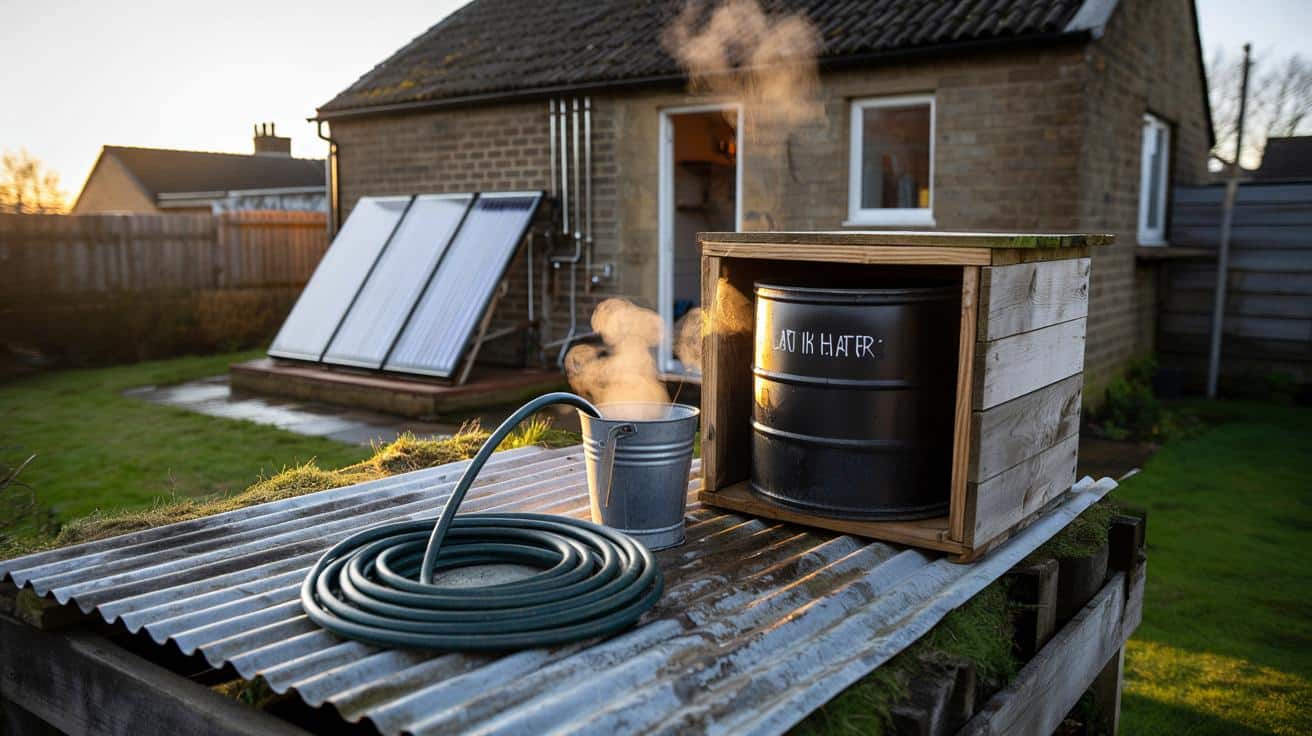
His water heater is a black hose coiled on a sheet of old tin, the kind you see on garden sheds. No gas line, no power cable. Just sunlight, plastic, and a bucket. Steam rises into the cold morning air while the neighbours’ boilers grumble in the background.
On social media, those clips travel fast. “Free hot water!”, “Off‑grid in the city!”, “Never pay an energy bill again!”. The promise est simple: récupérer la chaleur qui nous entoure déjà. From the roof, from the ground, from the air leaving your tumble dryer.
Some of these DIY systems work surprisingly well. Others are little more than lukewarm optimism in PVC form. The difference looks small on YouTube. In real life, it’s brutal.
How “heat harvesting” dreams meet physics in the real world
Spend time in any self‑build forum and you start seeing the same pattern. Someone posts a sketch: black barrels on a roof, a salvaged radiator, a coil of pipe hidden under a dark deck. The idea is always the same: collect free heat from somewhere, stash it, then turn the tap and smile as hot water flows without fuel or electricity.
The comments fill up with encouragement, quick calculations, and photos of similar contraptions. It feels like a small rebellion against energy bills, fragile grids, and that sinking feeling when the boiler dies on a Sunday night. The fantasy is powerful: *hot water as a right, not a monthly negotiation with a utility company*.
Then winter shows up. The same posters come back with updates. “Only getting lukewarm now.” “Pipes froze last night.” “Partner says we’re going back to the old boiler.” Reality has a way of sneaking in through the back door of these bold experiments, and it usually enters with one word: losses.
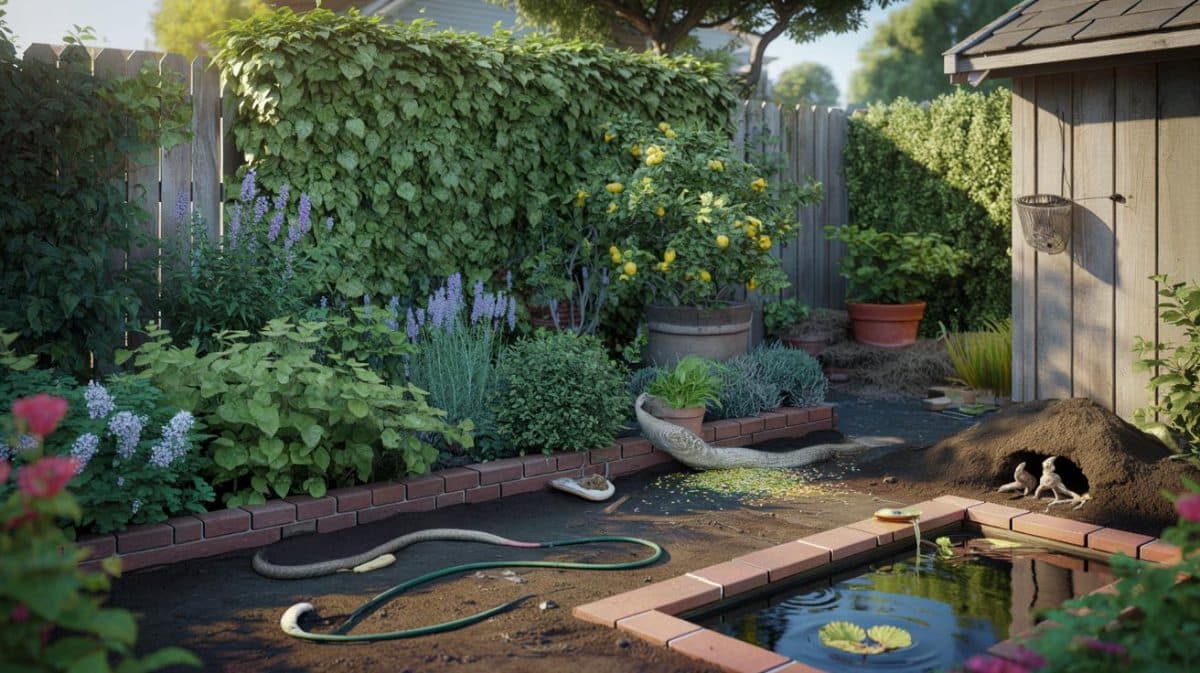
One of the most shared examples is the humble “solar shower” system. Picture a 50–100 metre garden hose, dark coloured, curled up like a sleeping snake on a sunny patch of terrace or roof. The sun hits the hose, the hose absorbs radiation, the water inside warms up as it trickles through. On a July afternoon in southern England, you can get water so hot you’ll instinctively jerk your hand away.
Scaled up, the same concept appears in DIY “batch heaters”: black‑painted water tanks inside glazed wooden boxes, often made from old double‑glazed windows. A family in Cornwall reported summer shower temperatures around 55°C from a single 200‑litre tank and no pump at all, just gravity and timing their showers for early evening. It’s crude, cheap, and when it works, slightly magical.
The fragile part hides behind the camera frame. On cloudy days, the temperature drops sharply. In shoulder seasons, people end up showering at odd hours just to catch the peak heat. Winter turns “free hot water” into “tepid at best”. Many of these systems quietly stop being used after the first novelty season, while the gas boiler or electric immersion creeps back into daily life.
The logic is simple and unforgiving. To heat water, you need energy. Sunlight, waste heat from appliances, warm indoor air: they’re all real sources, but their intensity changes with weather, season, and time of day. DIY systems that harvest this heat often forget the second half of the equation: you don’t just have to collect energy. You have to keep it from escaping.
➡️ Abdominal fat after 60 responds better to timing than intensity
➡️ How people naturally reset after social interactions without isolating
➡️ Cheap moisturizers rank high because skin doesn’t recognize branding
➡️ How emotional overload distorts perception of problems
➡️ Why some people greet dogs: psychologists connect it to social openness, not “quirkiness”
➡️ Boiling rosemary: the simple habit that changes the vibe of a room (and the ventilation tip)
➡️ Injecting water into oil fields: why it can reduce sinking—until it doesn’t
What actually happens inside most DIY “fuel‑free” hot water setups
Strip away the fancy names and diagrams, and nearly all DIY heat harvesting systems use one of three tricks. The first is solar thermal: using a dark surface and transparent cover to trap sunlight, like a greenhouse for water. The second is scavenging waste heat: wrapping pipes around flues, tucking coils behind fridges, or routing warm exhaust air through a heat exchanger. The third is storing heat in mass: barrels, concrete, gravel pits, all warmed slowly and then bled off later.
Each idea is sound on paper. A black absorber collects radiation. A copper coil can transfer heat from one fluid to another. A large tank holds thermal energy like a slow battery. In YouTube thumbnails, these parts look heroic. In a damp UK garden, they look like what they really are: pieces of a delicate compromise with the weather.
Where things unravel is usually insulation and control. Hot water stored in an uninsulated barrel will lose its warmth to the night sky faster than most people expect. Coils attached to boilers or stoves can overheat or underperform without valves and thermostats. Systems that rely on “automatic” thermosiphon circulation often stall because the pipe run is too long, too narrow, or too kinked. The energy is there, then gone, silently bleeding into the air.
The practical method that quietly works best is almost boring: a small, well‑insulated solar thermal loop helping a conventional hot water cylinder. Not a heroic standalone off‑grid rig, just an extra source of heat feeding into what you already have.
Imagine a pair of flat solar panels or a DIY glazed box on the sunniest wall of a terrace house. Inside runs a closed loop of antifreeze solution through copper or high‑temperature plastic. A tiny circulation pump — the only electrical piece — moves this fluid to a simple coil inside your existing cylinder. On sunny days, the pump kicks in and shaves 5–15°C off the work your boiler has to do.
The trick is focus. Short pipe runs so the heat doesn’t leak away. Aggressive insulation on every meter of pipe, even the parts in the loft that no one ever sees. A controller that only circulates when panel temperature is meaningfully higher than the cylinder. No fantasy of full independence. Just a steady, invisible background saving that nudges energy bills down week after week.
People often start with the wrong enemy. They fight the gas meter instead of fighting heat loss. So they build bigger collectors, more barrels, more hose. The water gets warm, then cools again before anyone uses it. Or the system is too inconvenient: shower only at 5pm, never on grey days, and forget about a hot bath. On a damp Tuesday in March, that deal suddenly looks less heroic.
We’ve all lived that moment where a clever eco‑hack becomes a daily chore. That “I’ll just” task that sounded fun on Sunday becomes unbearable on Thursday after work. Soyons honnêtes : personne ne fait vraiment ça tous les jours. The DIY setup that survives is the one you can ignore 90% of the time, not the one that demands a lifestyle change.
“Free heat is real,” says a Bristol engineer who’s helped neighbours with home‑brew solar loops, “but it’s not magic heat. You don’t get to skip physics. You just get to decide where you lose, and where you win.”
For most households, the sensible wins look surprisingly modest:
- Oversize insulation, undersize ambition: a small, reliable solar loop plus very fat pipe lagging beats a giant, leaky collector field every time.
- Use the boiler as a backup, not a villain: treat DIY heat as a helpful preheat, not as a brave standalone system.
- **Design for cloudy days, not just Instagram days**: if it’s miserable in November, you’ll stop using it, no matter how clever it looked in July.
Why these systems fail less on roofs… and more in our expectations
The gap between the dream and the plumbing is often emotional, not technical. Hot water is comfort, routine, a kind of quiet promise the house makes: “You’re safe here.” Take that away, or make it conditional on sun, timing, and fiddly valves, and resistance rises fast. Partners roll their eyes. Kids complain. Guests hesitate at the bathroom door.
A small, honest solar assist feels more like an invisible upgrade than a moral crusade. No one needs to know whether the shower is 30% “sun‑powered” today. The drama belongs in the spreadsheet, not under the shower head. *You still get your long wash after a terrible day; you just pay the gas company slightly less for the same comfort*.
There’s also a silence in many DIY videos around maintenance. Hoses degrade under UV. Black barrels grow algae. Air bubbles creep into pipe runs and block circulation. A single dodgy joint can drain a system you’re not watching every day. And life is busy. The system that needs you to “just check this once a week” slowly dies the same way houseplants do in the spare room.
The projects that quietly keep working tend to share a boring set of traits. They are slightly over‑insulated. They aim for a realistic temperature lift, not boiling water from a cloudy sky. They steal design cues from commercial systems: expansion vessels, pressure relief valves, mixing valves to avoid scalding. Their owners treat them as plumbing first, eco‑symbolism second.
Yet there’s a deeper reason people keep coming back to these ideas, even after failed experiments. It’s not only about saving on bills. It’s about agency. About feeling that, in a world of rising prices and fragile grids, you’re not completely at the mercy of invisible infrastructure. A coil of pipe on a shed roof won’t change the energy system. It might change how you feel when you turn the hot tap.
So the question lingers. How much “free heat” do you really want to chase, and what are you willing to trade for it? Reliability, convenience, aesthetics, a bit of money upfront? There’s no single right answer. There are only households trying to draw their own line on that spectrum, sometimes with a leaky barrel, sometimes with a neat, nearly invisible loop of pipe behind the airing cupboard.
| Point clé | Détail | Intérêt pour le lecteur |
|---|---|---|
| Comprendre la physique | La collecte de chaleur gratuite ne supprime pas les pertes, elle les déplace | Évite de tomber pour des promesses “illimitées” irréalistes |
| Viser l’assistance, pas l’autonomie totale | Une boucle solaire bien conçue préchauffe l’eau plutôt que de remplacer complètement la chaudière | Permet des économies réelles sans sacrifier le confort quotidien |
| Surdimensionner l’isolation | Chaque mètre de tuyau mal isolé annule une partie du gain | Maximise le bénéfice de tout projet DIY, même modeste |
FAQ :
- Can I really get hot water with no fuel and no electricity at all?Yes, but only in certain conditions. Purely passive solar systems work on sunny days and usually in warmer months. In a UK climate, most people end up combining them with a conventional heater.
- Are DIY solar water heaters safe?They can be, if you copy proven designs and include basics like pressure relief and mixing valves. The riskiest systems are improvised coils on stoves or boilers without proper control.
- Is it worth using waste heat from my shower or washing machine?Heat recovery from drain water can make sense, especially in homes with high hot‑water use. It won’t give you “free” hot water, but it can cut the energy needed to reheat incoming cold water.
- What’s the biggest mistake people make with DIY heat harvesting?Underestimating heat loss. Large, uninsulated tanks and long runs of bare pipe look impressive but bleed away the energy you’ve worked to collect.
- How much money can a small solar assist system actually save?In a reasonably sunny part of the UK, a modest, well‑designed system can often cover 40–60% of annual hot‑water energy. The exact saving depends on your usage, but it’s usually measured in hundreds of pounds over several years, not overnight miracles.