The sign in the fishmonger’s window used to be almost an apology: “Mackerel – cheap today.
” For years, these shimmering, oily fish were quietly pushed aside while supermarket cabinets glowed with farmed salmon and vacuum‑packed cod from somewhere far away. Now the handwritten labels are different. “Local mackerel, landed this morning.” “Herring – line caught, village boat.” The same fish once whispered about as “poor people’s food” are suddenly back in the spotlight, framed as fresh, sustainable and – whisper it – fashionable. Something has shifted in the cold chain between sea, market and plate. And it’s not just about taste.
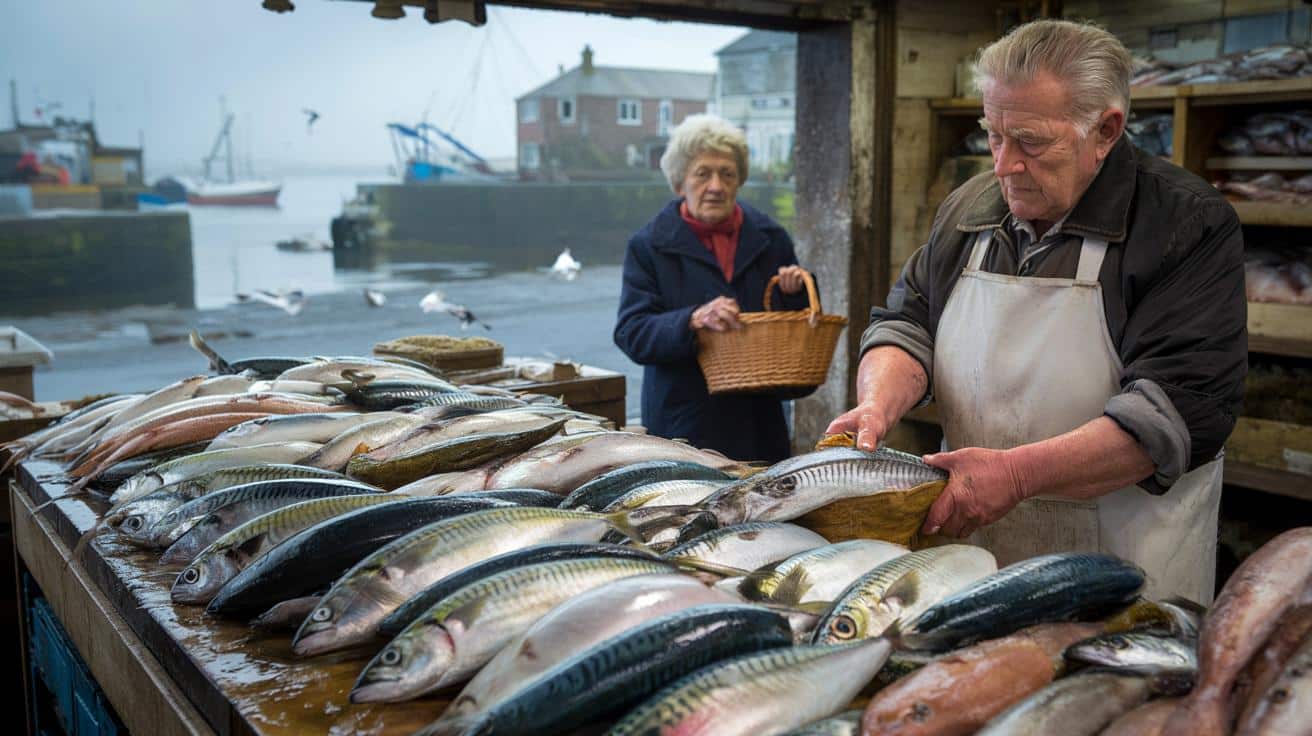
It’s a Tuesday morning in a damp coastal town in the North of England, the kind of place postcards gave up on years ago. The harbour is half cranes, half seagulls, and the smell of diesel hangs over the water. Inside the small fish shop, lights flicker as locals shuffle in with baskets and quiet shopping lists.
A pensioner in a navy coat points at a tray of gleaming, striped fish. “Haven’t seen mackerel this fresh in ages,” she says, almost to herself. The fishmonger, sleeves rolled up and fingers half‑blue from the cold, smiles like he’s been waiting for that line.
“Weather’s been kind. And the big boys are stuck with their frozen imports,” he replies. He wraps four fish in brown paper with a care that outweighs the price tag. On the wall, a chalkboard reads: “Local catch first. The world can wait.”
The “poor people’s fish” that wouldn’t go away
For decades, fish like mackerel, herring, sprats and sardines sat at the bottom of the menu hierarchy. They were the stuff of cramped kitchen tables, fried in too much oil, served with bread when there wasn’t much else. They smelled strong, left bones in your teeth, and rarely made it into glossy cookbooks.
Supermarkets and global supply chains leaned into the snobbery. Prime shelf space went to white, boneless fillets from industrial trawlers: cod from the Barents Sea, basa from Vietnam, farmed salmon from Norway and Chile. Cheap, uniform, easy to cook badly yet still edible. The “poor people’s fish” never really disappeared, but they got pushed into tins, discount freezers and the corners of open markets that fewer people visited.
Then supply chains started to crack. Shipping delays, fuel costs, new regulations, climate shocks. Suddenly, a supermarket buyer in Leeds found it harder to guarantee cheap cod every week, while a small boat in Whitby was landing boxes of perfectly good, under‑loved fish. The balance began to tilt again. Not from nostalgia, but from raw logistics.
Take the story of Portugal’s “carapau”, a humble horse mackerel long considered a budget staple. Before the pandemic, supermarket promotions focused on imported cod and foreign farmed fish. Local carapau was cheap, yes, but rarely celebrated. Then shipping containers stalled and imported prices jumped.
In 2021, one mid‑sized Portuguese chain launched a quick, almost desperate campaign: “Eat what our sea gives us.” Ads showed grilled carapau on smoky barbecues, grandmothers seasoning fish like they were rock stars. Sales of local mackerel and horse mackerel jumped by double digits. Restaurants followed, adding “poor people’s fish” to menus with craft‑beer levels of pride.
Data from several EU coastal regions tell a similar story. Once ignored species are climbing steadily in retail share. They’re still cheaper than imported salmon, but the gap is shrinking. What was once the fish of necessity is now the fish of common sense – and increasingly, of choice.
➡️ Abdominal fat after 60 responds better to timing than intensity
➡️ Paid to live on a remote island: what these programs typically ask for beyond the headline perks
➡️ Boiling rosemary: the simple habit that changes the vibe of a room (and the ventilation tip)
➡️ Why some people greet dogs: psychologists connect it to social openness, not “quirkiness”
➡️ Old furniture looks dull not because it’s damaged, but because the finish reacts to modern cleaners
➡️ How emotional overload distorts perception of problems
➡️ Injecting water into oil fields: why it can reduce sinking—until it doesn’t
There’s a cold logic behind the comeback. Global seafood supply chains are brilliant when everything works. Reefer containers, distant water fleets, factory filleting lines. But they are fragile. One blocked canal, one conflict, one spike in fuel prices, and the true cost of flying a fish halfway across the planet shows up on the shelf label.
Local fish, landed from day boats and small trawlers, sidestep a big chunk of that fragility. They still need ice, storage, transport, of course. Yet they aren’t hostage to the same maze of middlemen and long‑haul shipping. When buyers start doing the maths, the “cheap” imported fillet doesn’t always look so cheap.
At the same time, consumers are quietly changing. People read more labels. They Google the name of the boat. They ask where the fish actually swam. ***Poor once*** doesn’t carry the same weight in an era where “sustainable” has become the new luxury word. The supply chain screws may have tightened first, but culture is catching up fast.
How to bring “poor people’s fish” back to your own table
The trick with these returning species is simple: treat them like they matter. A fresh mackerel or herring is unforgiving if you overcomplicate it. Start with the basics. Buy whole fish where you can, eyes clear, gills bright, no suspicious smell. If the fishmonger knows which boat it came from, that’s a good sign.
Once home, keep it *cold and quick*. These oily fish spoil faster than thick white fillets. Roast them hot and short with salt, lemon and maybe a few sliced onions under the grill. For mackerel, slashing the skin with a sharp knife lets the heat in and the fat out. Suddenly this “poor” fish tastes like it wandered off a fancy small‑plates menu somewhere in east London.
On a weeknight, you don’t need chef‑level moves. A tray, some olive oil, a hot oven, ten minutes. The rest is garnish.
Many people shy away from these fish because of bones, smell, or simple habit. On a crowded weekday evening, it feels easier to reach for a bag of frozen cod bites. On a bad day, that’s understandable. Soyons honnêtes : nobody descaling a fish at 9pm is living their best life.
There are workarounds. Ask the fishmonger to gut and butterfly the fish, or to remove the head if that makes it less confronting in your kitchen. Cook with your windows open and a pan that you actually scrub, not wipe. If the bones scare you, start with grilled fillets instead of whole fish, or use them in fishcakes where texture is forgiving.
And remember that learning to cook “poor people’s fish” is a muscle. You burn one, you learn. You nail one, you repeat. On a chilly night, a plate of grilled sardines with lemon and bread feels like cheating the economy.
There’s also a quiet pride building around this shift. As one young chef in Hull told me:
“My nan fed six kids on herring because she had no choice. I put herring on my menu because I do.”
That kind of emotional loop matters more than any sustainability label. When people reconnect with the fish from their own coast, they’re not just shopping differently, they’re rewriting a bit of family history. Poor food doesn’t stay poor when it’s chosen, not imposed.
For anyone trying to ride this wave, a few simple anchors help:
- Know two or three “go‑to” recipes that you can cook half‑asleep.
- Learn one local fish by name, season and look.
- Talk to one seller you trust and actually listen to their advice.
Most people won’t turn into obsessive fish geeks. *And that’s fine.* Tiny, repeatable habits shift demand far more than heroic one‑off experiments.
A quiet revolution in the chilled aisle
What’s happening on those wet fish counters and harbour quays is more than a quirky food trend. It’s a small correction in how we think about value, class and the distance on our dinner plate. The “poor people’s fish” label is starting to peel away, revealing something much older and less judgmental: seasonal, nearby, ordinary food that respects the sea without turning it into a luxury theme park.
We’re likely to see this dance continue. When logistics are smooth and fuel is cheap, imported fillets will flood back in. When crises hit, local catch will carry more of the load. The difference now is awareness. Once people have tasted really fresh mackerel or grilled herring straight off a local boat, the memory sticks. No vacuum‑packed plank of anonymous white fish quite scratches the same itch.
On a grey morning in that northern fish shop, another handwritten sign goes up: “Sprats back in – short season, blink and you miss it.” A couple of years ago, hardly anyone would have blinked. Today, two customers change their order on the spot. Not because they’ve read a think‑piece about supply chains. Because the fish is there, it’s local, and it suddenly feels like the smart choice.
| Point clé | Détail | Intérêt pour le lecteur |
|---|---|---|
| Retour des poissons “pauvres” | Mackerel, herring, sardines et autres espèces locales reprennent de la place en rayon | Comprendre pourquoi certains poissons deviennent à la fois tendance et abordables |
| Rôle des chaînes d’approvisionnement | Coûts du transport, retards et risques géopolitiques rendent le local plus logique | Décoder l’impact caché de la logistique sur les prix et la fraîcheur |
| Gestes concrets en cuisine | Recettes simples, achat en poissonnerie, quelques réflexes pour cuisiner ces espèces | Passer à l’action sans stress et améliorer ses repas du quotidien |
FAQ :
- Why are “poor people’s fish” becoming popular again?Because global supply chains are more fragile and expensive, retailers and restaurants are turning back to local, under‑used species that are fresher, cheaper to source and easier to market as sustainable.
- Are these local fish actually better for the environment?Often yes, especially when caught by small boats with selective gear and sold close to where they’re landed, which reduces transport emissions and waste, though it always depends on the specific fishery.
- How can I tell if a fish is really local?Check the label for catch area and vessel name, ask the fishmonger where and when it was landed, and look for seasonal availability rather than year‑round presence.
- What’s the easiest “poor people’s fish” for beginners?Fresh mackerel fillets are a good start: they cook quickly under a hot grill, need only salt and lemon, and don’t require complex preparation or special equipment.
- Will these fish stay cheap if they become trendy?Prices may rise as demand grows, but they usually remain more affordable than premium imported species, especially when bought in season and close to the source.