A bus running late, three unanswered messages from your boss, your child asking where their gym shoes are, again.
Nothing dramatic on its own, yet your chest is tight and your brain has quietly switched to alarm mode. The problems haven’t changed, but they suddenly look sharper, darker, bigger.
You reread an email and spot hidden criticism that probably isn’t there. A casual “We need to talk” from a partner sounds like the beginning of the end. Your mind starts drawing catastrophic storyboards in fast-forward, each scene more detailed than the last.
What’s strange is that, on another day, you’d shrug and carry on. Same facts, same situation, totally different movie in your head. Something happens between reality and the way we see it when emotions overflow.
And that distortion quietly shapes the choices we make.
When feelings turn problems into monsters
Your brain doesn’t simply receive reality, it edits it. When you’re emotionally overloaded, that inner editor goes rogue. Colours get more saturated. Neutral faces look slightly hostile. Ordinary tasks feel like hostile terrain.
Stress hormones narrow your focus to threats. That was brilliant when our ancestors faced wild animals. In a meeting room or on a crowded train, it means you zoom in on what’s wrong and crop out what’s neutral or good. One awkward comment suddenly defines the whole day.
The result is a kind of emotional tunnel vision. Real problems exist, yes. But their shape on your mental screen gets stretched and twisted until they barely look like the original.
Take a simple example: a missed call from your manager. On a calm day, you think, “I’ll call back after lunch.” Your heart rate stays steady, your brain stays online. No drama.
Now place the same missed call on a day when you slept four hours, had an argument at breakfast, and spilled coffee on your shirt. Emotional tension is already high. Your phone lights up and your mind writes a whole script: “They’re unhappy. I’ve messed up. Something’s wrong with the project.”
By the time you call back, you’re defensive, flustered, half expecting a fight. The irony is painful: your emotional overload has already changed the conversation before it starts. The “problem” was partly created by the way your nervous system framed it.
➡️ Injecting water into oil fields: why it can reduce sinking—until it doesn’t
➡️ Abdominal fat after 60 responds better to timing than intensity
➡️ Cheap moisturizers rank high because skin doesn’t recognize branding
➡️ How people naturally reset after social interactions without isolating
➡️ Why some people greet dogs: psychologists connect it to social openness, not “quirkiness”
➡️ Old furniture looks dull not because it’s damaged, but because the finish reacts to modern cleaners
Psychologists sometimes describe this as a mix of cognitive bias and physiological hijack. When you’re flooded with emotion, the brain leans on shortcuts. Threat feels more likely. People seem less reliable. Future scenarios tilt towards disaster.
Your body backs this up with physical signals: faster heartbeat, shallow breathing, tight muscles. The brain reads these signals and concludes, “See? We must be in danger.” So it scans harder for proof. That email delay? Confirmation. That neutral look? Confirmation again.
Once that loop is active, actual problem-solving shrinks. Instead of asking “What’s really happening?”, you ask “How do I escape this?” Problems turn into monsters not because they are huge, but because they’re lit by the red, flashing light of emotional overload.
How to de-fog your perception when you’re flooded
One concrete move can change a lot: give the emotion a name before you tackle the problem. Not a poetic description, just a short label. “I’m scared.” “I’m overwhelmed.” “I’m ashamed.”
This simple act, known as affect labelling, helps the brain shift a bit of energy from raw reaction to reflection. You’re not pushing the feeling away, you’re placing a thin sheet of glass between you and the storm. For a few seconds, you become the person noticing the emotion, not the emotion itself.
Once you’ve named it, touch something around you. The table, your chair, the sleeve of your jumper. That small sensory anchor signals to your body: I am here, in this room, not inside the movie in my head.
Many people jump straight from feeling to action. Anxious? Send three urgent messages. Angry? Fire off a sharp email. Hurt? Withdraw, delete, disappear. The brain loves that kind of quick discharge, it feels like release.
The cost shows up later. Relationships get strained, work decisions become erratic, and you start to distrust your own judgement. Soyons honnêtes : personne ne fait vraiment ça tous les jours, mais pausing for 90 seconds before reacting can be a quiet revolution.
One realistic habit is to build a tiny “cooling gap” ritual. Walk to the bathroom. Sip water slowly. Open a notes app and write one line: “Right now I’m feeling…” That’s it. Not a full journal, not a life overhaul. Just a repeatable micro-gesture that tells your nervous system: we don’t act from the peak of the wave.
“Emotions are data, not directives. They tell you something is happening, but they don’t always tell you what to do.”
When emotional overload hits, three traps appear almost instantly:
- Taking thoughts as facts: “I feel rejected” quietly becomes “They are rejecting me.”
- Time collapse: today’s setback feels like a permanent verdict on your future.
- Mind-reading: you fill in other people’s motives with your worst fears.
*You don’t need to eliminate these reflexes, just learn to spot them a bit earlier.* The goal isn’t to become a calm robot. It’s to keep enough space inside your reactions so that you can still see the actual size and shape of the problem in front of you.
Living with big feelings without letting them steer the ship
There’s a quiet shift that happens when you start asking, “What in this situation is real, and what is my nervous system adding?” It’s not self-blame, it’s curiosity. You’re learning the particular way your mind bends reality when you’re overloaded.
For one person, everything becomes urgent. For another, every disagreement becomes proof that relationships are unsafe. For someone else, emotional overload paints the future in pure black. Once you start recognising your “signature distortions”, they lose some of their grip.
On a good day, that might sound almost obvious. On a bad day, it can be the thin rope you hold while the wave crashes. And that rope is often just one honest question: “If I were calmer, would this look different?”
On a friend’s sofa at 11 p.m., problems often suddenly shrink. The bill is still unpaid, the job still uncertain, the relationship still complicated. Yet telling the story out loud softens the edges. Your body relaxes by a few degrees. The monster turns back into a pile of tasks and conversations.
There’s a reason talking helps: it moves your experience from the raw emotional circuits into language. That simple transfer changes the texture of the problem. It’s still there, but it’s now something that can be approached, discussed, questioned.
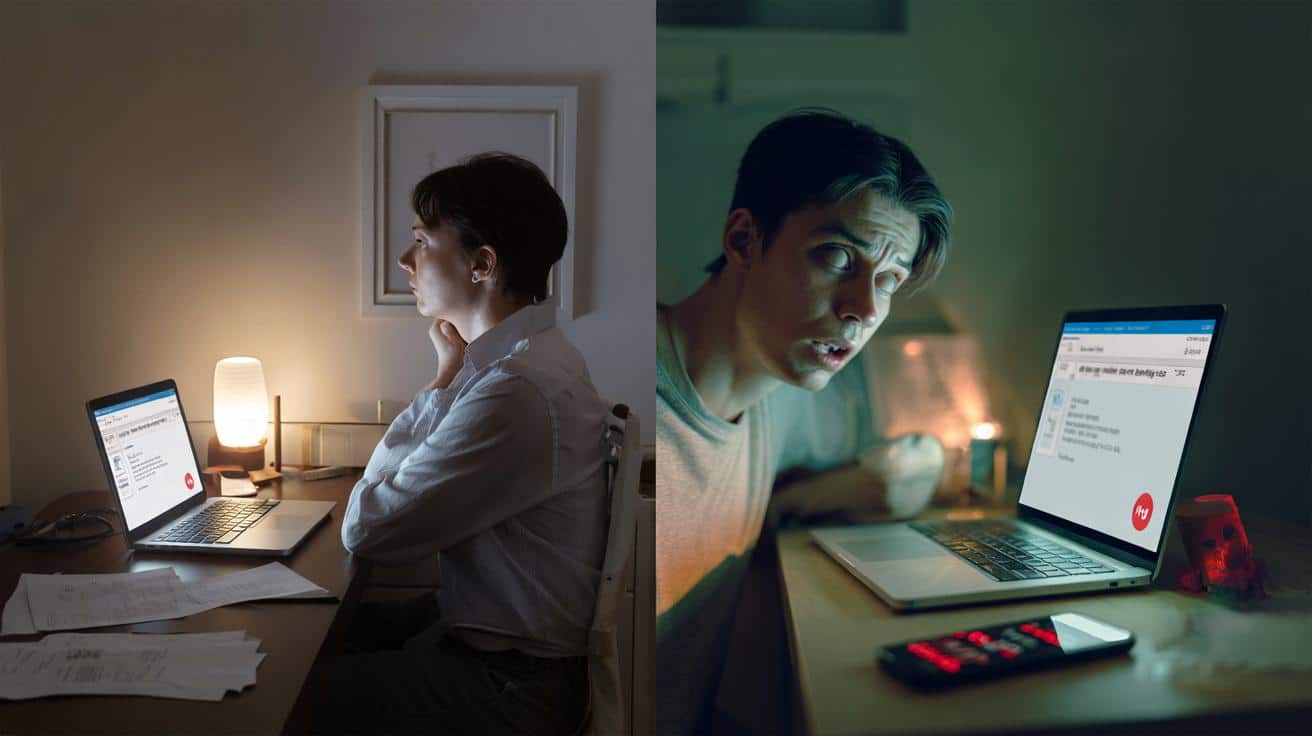
That’s why the worst place for emotional overload is alone in your head, late at night, scrolling. The screen keeps your nervous system on alert, your thoughts loop faster, and perspective becomes a luxury. On a human level, on a very ordinary Tuesday, the bravest act might be sending a message that says, “Have you got five minutes? My brain is blowing things out of proportion.”
The point isn’t to become someone who never overreacts. On a social level, some problems really are urgent, unfair, huge. Anger, fear and grief are part of being awake to the world. The skill is to let those feelings inform you without letting them secretly distort the map you’re using to navigate.
You might start noticing patterns: the topics that trigger exaggerated fear, the times of day when everything looks worse, the people with whom you consistently misread signals. Each pattern you spot is one less invisible hand tugging at your perception.
From there, a different question can emerge, quieter and more generous: “Given how I’m wired, how can I meet this problem in a way I won’t regret tomorrow?” That’s not about perfection. It’s about walking through your own storms with a bit more light on.
| Point clé | Détail | Intérêt pour le lecteur |
|---|---|---|
| Émotions et perception | L’overload émotionnel agit comme un filtre qui grossit les menaces et efface le neutre | Comprendre pourquoi certains jours tout semble “trop” et éviter les réactions disproportionnées |
| Micro-pauses utiles | Nommer l’émotion, créer un “cooling gap”, s’ancrer dans le corps avant d’agir | Disposer de gestes très concrets pour retrouver un minimum de clarté en quelques minutes |
| Signature personnelle | Chaque personne a ses distorsions typiques sous stress : urgence, catastrophisme, repli | Identifier son propre schéma pour moins le subir et faire des choix plus alignés |
FAQ :
- How do I know if I’m emotionally overloaded or if the problem really is huge?Notice the gap between different moments: if the same issue looks apocalyptic at night and manageable in the morning, part of the weight is emotional load, not just the situation.
- Why do small things set me off when I’m tired?Fatigue lowers your emotional “buffer”. Your brain has less capacity to regulate, so minor frustrations arrive in a system that’s already running hot.
- Can I trust my decisions when I’m very emotional?You can listen to what your feelings are pointing at, but big, irreversible decisions are better made after some form of cooling gap or outside perspective.
- Isn’t it fake to pause and breathe instead of reacting honestly?Pausing doesn’t cancel honesty, it gives you a chance to express it in a way your future self and your relationships can live with.
- What if emotional overload comes from real trauma or chronic stress?Then self-tools might not be enough on their own; combining them with professional support can help your nervous system relearn what “safe enough” feels like.