The woman in the gardening gloves spots it first.
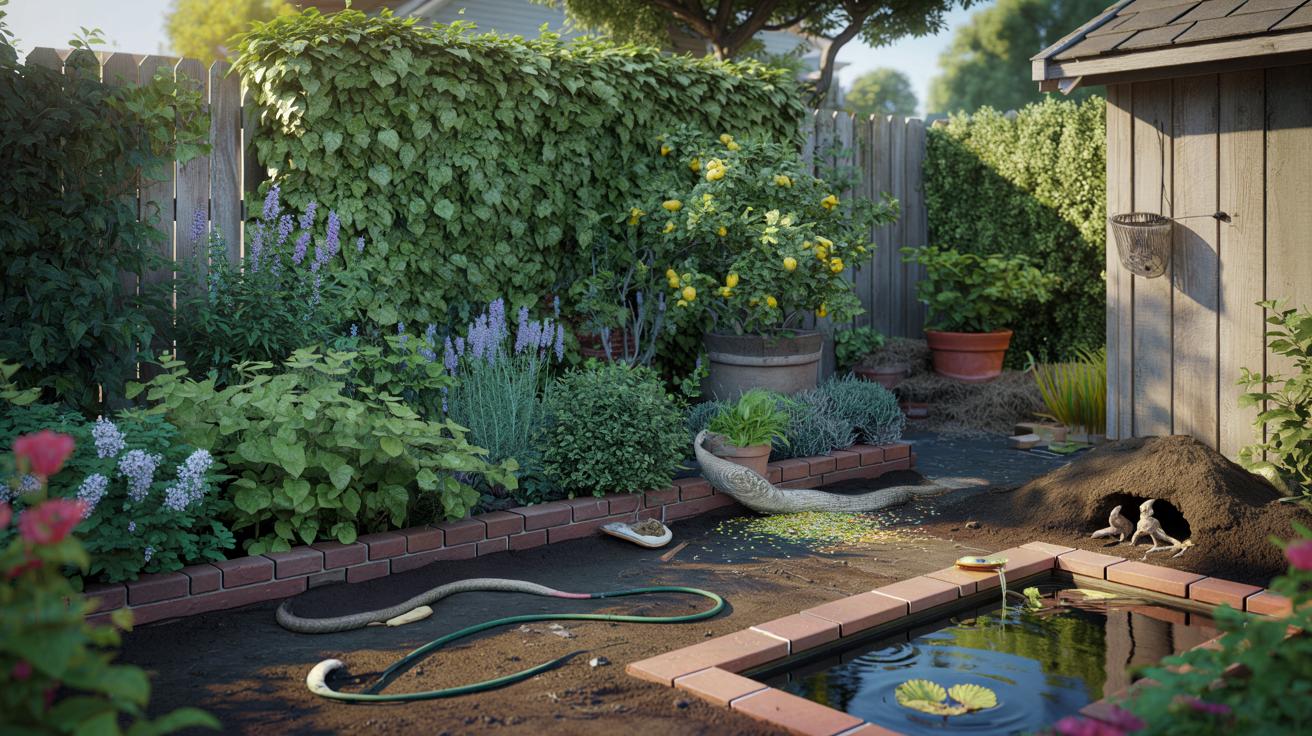
A thin, grey body slipping away between the terracotta pots, quiet as a dropped shoelace. She freezes by the hydrangeas, hose still running, water darkening the soil around her sandals. “Why are they always in my garden?” she mutters, more tired than terrified.
Her neighbour leans over the fence with the authority of someone who’s read one forum thread and never forgotten it. “It’s those plants,” he says. “Snakes love them. You’ve basically built a reptile hotel.” She looks around at the lavender, the roses, the climbing ivy she’s so proud of, and suddenly everything seems suspicious.
Later, when the garden is empty again, the question still hangs there among the leaves. Are certain plants really “calling” snakes in… or is something subtler going on?
Snake-attracting plants: myth, half-truth and what’s really going on
The phrase “snake-attracting plants” is made for late-night scrolling and nervous imaginations. Search it once and you’re knee-deep in lists: jasmine, ivy, banana trees, dense shrubs, water-loving ornamentals. Each photo feels like a quiet accusation. Yet when you actually sit in a real garden for an afternoon, watching the shadows change, the story looks very different.
Snakes don’t wander around with a secret list of favourite flowers. They follow three brutally simple needs: food, water, shelter. Plants only enter the picture when they provide one of those three. Dense groundcovers where rodents hide. Fruit trees that drop snacks for mice and rats. Cool, shaded root tangles that feel like a safe tunnel.
That’s where the confusion starts. A plant that attracts frogs or rodents will seem to “attract” snakes, because it completes the food chain. The plant is the stage, not the star. Once you see your garden like that – a series of small stages where tiny dramas happen – the snake myth turns into something far more logical, and oddly less frightening.
Take jasmine, a regular villain in online lists. A homeowner in suburban Brisbane swore her jasmine hedge was “calling” snakes. Every summer, she’d see a carpet python looped lazily along the fence. The plant got the blame; the hedge looked like a reptile magnet, thick and tangled and green.
When a local wildlife rescuer came to relocate one of the pythons, he did what people rarely do: he looked beyond the leaves. Behind the jasmine was a broken compost heap leaking kitchen scraps. Under the hedge, a network of burrows from rats and bandicoots. Fallen birdseed scattered where the kids filled the feeder too generously.
The “snake hedge” turned out to be a rodent buffet under a shady pergola. The jasmine wasn’t bait. It was just the equivalent of a quiet corner booth in a 24-hour diner. Once the food sources were cleaned up and the compost rebuilt, snake sightings dropped, even though the jasmine stayed. The plant had never been the main character at all.
Gardeners love tidy answers. Ban this plant, plant that one, problem gone. Snakes refuse to play along. They’re opportunists, reading your outdoor space like a map of easy options. Low, spreading plants with matted stems turn into excellent rodent cover. Rockeries filled with trailing groundcovers offer cool, narrow gaps for a resting reptile. Vines that climb along fences can conceal small mammals that think they’re hidden.
➡️ “Poor people’s fish” returns when supply chains favor local catch again
➡️ Abdominal fat after 60 responds better to timing than intensity
➡️ Injecting water into oil fields: why it can reduce sinking—until it doesn’t
➡️ How emotional overload distorts perception of problems
➡️ Why some people greet dogs: psychologists connect it to social openness, not “quirkiness”
➡️ Cheap moisturizers rank high because skin doesn’t recognize branding
➡️ How people naturally reset after social interactions without isolating
Then there’s water. Any plant that demands frequent watering or sits in a damp corner creates a microclimate. Frogs appear. Insects thrive. Small predators follow them. In warm climates, that chain can end with a snake, not because it loves your hostas, but because it loves the frogs your hostas invite.
*Once you stop asking “Which plants attract snakes?” and start asking “What in my garden makes life easy for them?” you get much better answers.* Plants become one piece of a bigger puzzle: shade, moisture, clutter, food. And unlike the internet myth machine, that puzzle is something you can gently re-arrange without torching your flower beds.
How to make your garden less tempting – without ripping everything out
The most effective “snake control” strategy is boringly practical. Walk your garden the way a snake would: low, patient, hunting for quiet hiding spots. Start with ground level. Trim back plants that spill heavily onto soil and create deep, untouched shade right on the surface. That lush, untouched tangle at the back of the border? It’s a five-star hotel for rodents, which means a decent chance of reptile visitors.
Lift pots onto stands, bricks or shelves so there’s airflow underneath rather than cool darkness. Keep mulch to a moderate depth; a thick, neglected layer can hide both prey and the predators that follow. Where you can, break up continuous cover. Alternate denser shrubs with open patches of gravel, bark, or lawn, so there’s no long, uninterrupted tunnel of safety along your fence line.
Water features deserve a second look. A small pond surrounded by tall grasses and rocks is basically a wildlife magnet. That might be exactly what you want – many gardeners love seeing frogs and dragonflies. If you’re anxious, though, choose cleaner edges: lower, less cluttered planting, fewer stacked rocks with narrow gaps, and regular clearing of fallen leaves that create moist, decaying mats. You’re not trying to sterilise the space. Just turn the volume down a notch on “perfect ambush site”.
Here’s the part most people don’t say out loud: the plants are rarely the central problem. It’s the mess wrapped around them. Fallen fruit sitting for days under citrus trees. Bird feeders scattering seed across thick shrubs. Bags of soil left ripped open in a shady corner. All this builds a quiet rodent kingdom that snakes are simply smart enough to tap into.
On a human level, fear takes over before logic has a chance. Someone spots a snake slithering out from under the lavender and the plant gets the blame, not the mouse burrow directly beneath it. Gardeners rush to rip out entire beds, then keep all the other habits that attracted prey in the first place. The result is a barer, less pleasant space that still plays host to the exact same food chain.
Soyons honnêtes : personne ne fait vraiment ça tous les jours. No one walks the garden with a clipboard each evening, logging fallen fruit and rogue seed. What works long-term are small, realistic habits. Pick up windfalls once or twice a week in high season. Store pet food and birdseed in sealed containers. Close the gap under the shed where “one or two” mice turned into a family. With those simple changes, the specific plant list stops feeling like a curse.
There’s also a mindset shift that makes everything less frightening. You’re not waging war on snakes. You’re quietly changing the odds. That might mean accepting some wildlife – lizards, frogs, insects – while nudging your space away from the high-risk combination of thick cover, constant moisture and abundant prey. It’s about balance, not bare earth.
“When people say ‘that plant attracts snakes’, what they’re really saying is ‘I noticed a snake near that plant once and it scared me’,” says a UK-based herpetologist I spoke to. “The animal was there for shelter or food. The plant just happened to be the wallpaper.”
For practical steps, it helps to think in simple, repeatable moves rather than grand redesigns. A quick mental checklist each season can go a long way:
- Cut back plants that rest directly on soil and create dark, unmoving pockets.
- Reduce clutter around sheds, wood piles and compost heaps where rodents thrive.
- Skim ponds and clear leaf mats so edges stay visible, not swampy.
- Use raised beds or edging to break up long runs of thick groundcover.
- Talk to neighbours about shared habitats along fences and overgrown alleys.
None of this needs to turn your garden into a sterile, snake-proof bunker – that doesn’t exist anyway. You’re just dialling down the chance that your planting choices, watering habits and storage corners accidentally combine into the reptile equivalent of a luxury resort. The plants you love can usually stay. It’s the way everything fits together that really matters.
Living with the possibility, not the panic
Once you’ve seen a snake in your own garden, the memory lingers. You water the roses while scanning the base of every stem. You hang out the washing and picture a sleek body among the pegs. On a rational level you know most snakes prefer to avoid you. On an animal level, your brain replays that flash of movement in slow motion.
There’s a quiet power in learning how these animals actually think. They don’t haunt gardens for the thrill. They patrol routes that have worked before: along back fences softened by ivy, across warm paving at dusk, through compost-heated corners in winter. They’re drawn to success, not superstition. And success looks like small mammals, frogs, egg-laying spots and daytime hideaways, many of which happen to sit in or under plants.
On a street level, this can become a shared project instead of a private fear. One household clears fallen apples while another trims a thicket that’s turned into a de facto rodent motel. The neighbour who loves wild corners keeps them, but lifts logs and stones occasionally so life there doesn’t become entirely invisible. On a warm evening, you might still see a snake slide along the back fence. This time it reads differently: not an omen, just a predator passing through a landscape you understand a little better.
| Point clé | Détail | Intérêt pour le lecteur |
|---|---|---|
| Les plantes ne “n’attirent” pas seules les serpents | Ce sont les abris, la nourriture et l’humidité autour d’elles qui comptent | Évite d’arracher inutilement des plantes qu’on aime |
| Réduire les cachettes au sol | Tailler les plantes au ras du sol, limiter les zones sombres et denses | Diminue les chances de rongeurs… et donc de serpents |
| Agir sur les habitudes, pas seulement sur le décor | Gérer les fruits tombés, les graines, le rangement et l’eau stagnante | Stratégie plus réaliste, qui tient dans la durée |
FAQ :
- Do certain plants actually attract snakes?Not in the way headlines suggest. Snakes are drawn to places with prey, shade and moisture. Some plants create good hiding spots for rodents or frogs, which indirectly makes the area more interesting for snakes.
- Should I remove ivy, jasmine or dense shrubs if I’m scared of snakes?Only if they create thick, untouched cover right on the ground, especially near sheds or compost. Often, lifting branches, thinning growth and tidying what’s underneath is far more effective than ripping everything out.
- Are there any plants that repel snakes?There’s no solid evidence that popular “snake-repelling” plants do much. Strong-smelling species may discourage some small animals, but they won’t magically create a no-snake zone.
- What’s the safest way to garden in an area with snakes?Wear closed shoes and gloves, move slowly around dense plants, and use a tool to lift debris or rocks instead of bare hands. If you see a snake, step back, give it space to leave, and call a local expert if it doesn’t move on.
- How can I reduce snakes without harming wildlife?Focus on balance: limit rodent attractants, keep some visibility at ground level, manage water features thoughtfully, and leave wild corners where you can see what’s going on. That way, you support biodiversity without turning your garden into easy hunting grounds.